
Meyer Turku Celebrates Naming of Finland’s Second Next-Generation Offshore Patrol Vessel Valpas
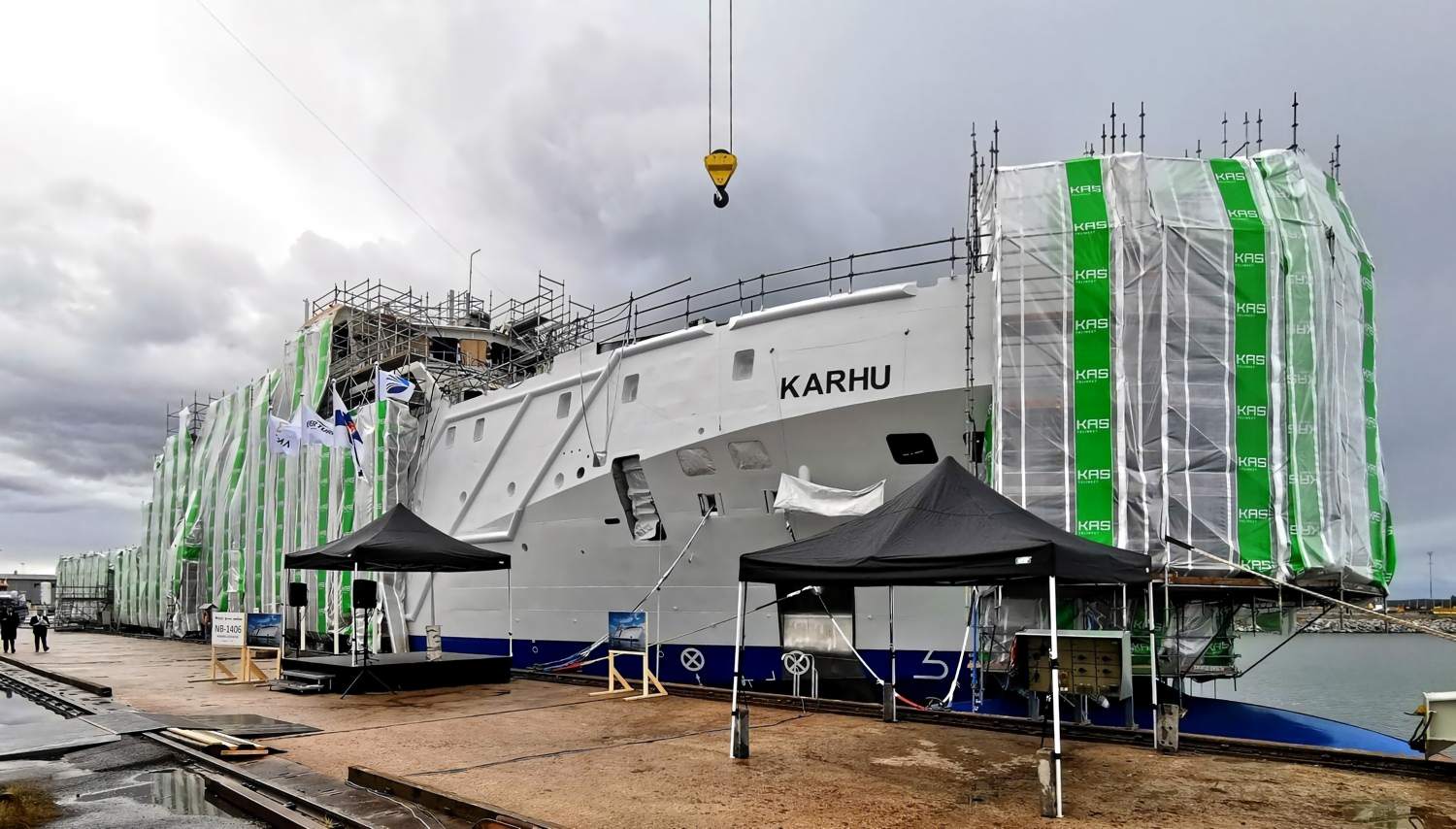
Finnish shipbuilder Meyer Turku has celebrated a major milestone in the construction of two new multipurpose offshore patrol vessels for the Finnish Border Guard. On October 30, 2026, the second vessel, Valpas, was officially named during a ceremony at the Uusikaupunki shipyard in Finland, where the vessel is undergoing outfitting and final construction.
The naming ceremony was attended by representatives of the Finnish Border Guard and Meyer Turku. Finland’s Minister of the Interior, Mari Rantanen, served as the vessel's godmother and formally christened the ship. The event marks another important step in one of Finland’s most significant maritime construction programmes.
Advanced Multipurpose Vessel Design
The new offshore patrol vessels are designed to strengthen Finland’s maritime operational capabilities under increasingly demanding environmental and security conditions.
Unlike conventional patrol vessels, the new ships are developed as highly versatile maritime platforms capable of supporting multiple missions, including maritime surveillance, search and rescue, environmental protection, and emergency response.
The vessels will incorporate advanced surveillance systems and improved information-sharing capabilities, enhancing maritime situational awareness and operational coordination.
Environmental protection is another important design consideration. The new vessels will provide improved capabilities for responding to major marine pollution incidents, including oil-spill recovery operations. These features reflect the growing importance of integrating environmental protection functions into modern maritime service vessels.
Low-Emission and Energy-Efficient Technologies
The new offshore patrol vessels have been designed with a strong focus on reducing environmental impact while maintaining high operational availability.
According to Meyer Turku, the vessels will feature low-emission and energy-efficient technologies to support extensive operations in the Baltic Sea. Earlier project information also identified a modern dual-fuel hybrid machinery concept as part of the development programme.
The vessels are expected to operate at sea for approximately 330 days annually, requiring high levels of reliability, operational endurance, and efficient onboard energy management.
These requirements present significant challenges in naval architecture and marine engineering, particularly in balancing propulsion efficiency, operational flexibility, environmental performance, and the ability to operate in demanding northern maritime conditions.
Strengthening Maritime Safety and Industrial Cooperation
The two-vessel programme represents the largest single investment in the history of the Finnish Border Guard.
The first vessel, Karhu, is scheduled for completion in summer 2027, while Valpas is expected to be completed by the end of 2027. Together, the two vessels will contribute to the modernization of Finland’s offshore patrol fleet and improve the country's ability to respond to maritime emergencies.
The project also demonstrates the importance of close cooperation between shipbuilders, government authorities, equipment suppliers, and engineering partners in delivering technically sophisticated multipurpose vessels.
For the naval architecture and marine engineering community, the development of Valpas highlights several important trends in modern special-purpose shipbuilding: multifunctional platform design, low-emission propulsion, advanced maritime surveillance, environmental emergency response, and high operational availability.
As demand for safer and more sustainable maritime operations continues to grow, projects such as Valpas provide valuable examples of how advanced vessel engineering can support both maritime safety and environmental protection.
Original Source: Meyer Turku, Finland
Author: Meyer Turku (individual author not specified)
Image Credit: Meyer Turku / Finnish Border Guar